
What Is Zoom Neck and Can It Be Improved?

Video calls changed how many people view their neck and jawline during everyday conversations.
What is Zoom neck and can it be improved? It may sound like an internet phrase, but the concern behind it is very real. During the lockdown years, many people became used to seeing themselves on screen for hours at a time. Video meetings brought colleagues, friends and families together, but they also introduced something most of us had never experienced before. Constant close-up observation of our own faces and necks under unforgiving lighting and awkward camera angles.
Most people do not sit in beautifully lit studios during online meetings. Instead, they look down at a laptop balanced on a kitchen table or positioned slightly too low on a desk. The result is often a tired, shadowed image that highlights loose skin, folds around the neck and changes in jawline definition far more harshly than we notice in everyday life.
That level of scrutiny differs enormously from the quick glance most people take in the mirror before leaving the house. Video calls encourage prolonged self-observation from deeply unflattering angles. As a result, many people who had never previously worried about their neck suddenly became very aware of it.
For years, people casually referred to this appearance as the equally unflattering term “turkey neck”. More recently, it has adopted a new name. “Zoom neck”.
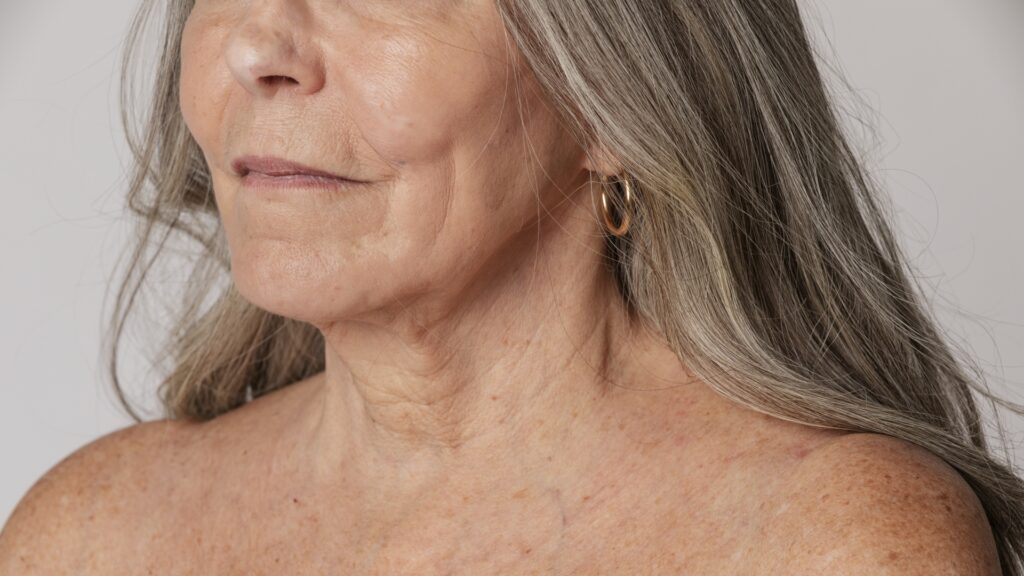
Neck ageing often develops gradually through changes in skin elasticity, muscle tone and jawline support.
What Actually Causes Zoom Neck?
While poor lighting and low camera angles often exaggerate the neck area, “Zoom neck” usually reflects a combination of genuine anatomical ageing and increased self-awareness.
Several changes commonly contribute:
- loss of skin elasticity
- loosening of the platysma muscle beneath the skin
- reduced jawline definition
- excess fullness beneath the chin
- changes in facial volume and support
These changes tend to develop gradually over time, which is why many people only begin to notice them once prolonged video calls repeatedly draw attention to the area. The neck often shows signs of ageing earlier than expected because the skin here is delicate and constantly moving. Genetics, sun exposure, weight fluctuation and lifestyle factors can all influence how quickly these changes appear.
Can Zoom Neck Be Improved?
In many cases, yes. The most appropriate treatment depends on what is actually causing the concern. Some people mainly notice changes in skin quality, while others develop muscle banding beneath the neck or fullness beneath the chin, which affects jawline definition.
A thoughtful assessment helps determine whether non-surgical treatment may help or whether a surgical approach would provide a more meaningful and lasting improvement.
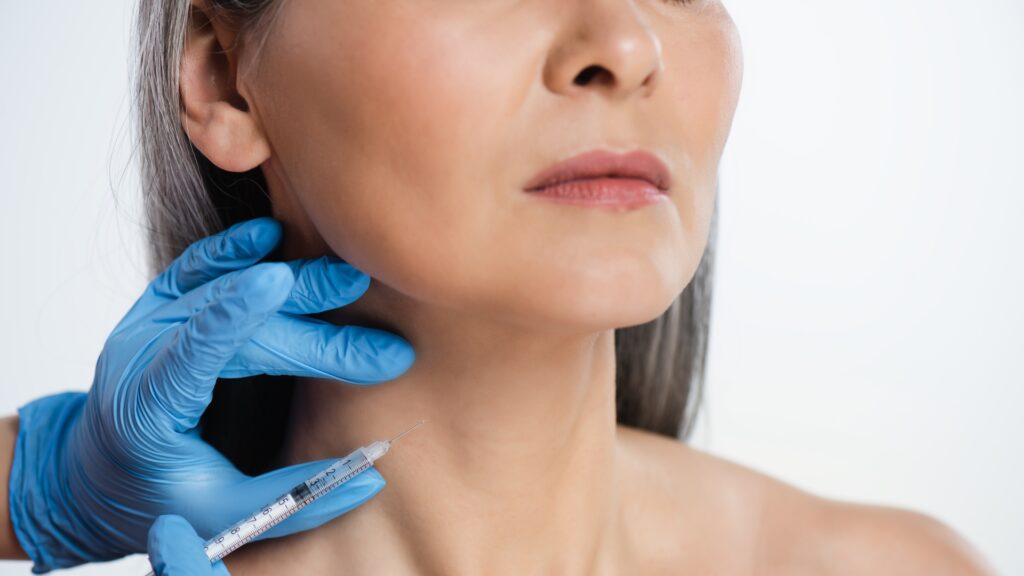
Non surgical treatments may improve skin quality and definition in selected patients with early neck ageing.
Non Surgical Treatments for Zoom Neck
Not everyone who worries about “Zoom neck” requires surgery. Camera angle, posture and lighting can all exaggerate the appearance of the neck during video calls. For early or mild neck ageing, non-surgical treatment may improve skin texture and definition.
Wrinkle relaxation treatment can reduce unwanted muscle activity in selected areas. Medical-grade skincare, such as the OBAGI NU DERM® system, may improve skin quality and help address sun-damaged skin around the neck and jawline.
In carefully selected patients, dermal fillers may also support surrounding facial structures where volume loss contributes to an imbalance in the lower face and jawline. Subtlety matters enormously. Over-treatment around the neck and jawline rarely produces elegant or natural-looking results. The most successful treatment plans usually involve careful balance and restraint.
Surgical Treatment for Zoom Neck
As skin laxity and muscle separation become more advanced, surgery may provide a more effective and longer-lasting improvement.
Platysmaplasty focuses on tightening the platysma muscle within the neck to improve contour and definition. This procedure may reduce visible neck banding and improve the transition between the jawline and neck. Some patients may also benefit from a neck lift or a lower facelift, where skin laxity and jawline changes extend beyond the neck.
In cases where fullness beneath the chin significantly contributes to the problem, liposuction may help improve the contour and definition of the neck and jawline.
Detailed surgical planning is extremely important. The aim should never be an over-tightened or artificially pulled appearance. Elegant results restore balance and definition while preserving natural movement and expression.

Elegant neck rejuvenation should look balanced, natural and never over corrected.
Why Natural Looking Results Matter
One reason neck ageing can feel particularly frustrating is that the area draws attention very quickly when treatment looks unnatural. An elegant result rarely appears obvious. Instead, people often notice that someone looks fresher, less tired or more defined without immediately recognising why.
This level of subtlety requires judgement, restraint and an understanding of how the face and neck work together as a whole.
Under the care of Kalliroi Tzafetta, treatment planning begins with understanding the underlying anatomy and the individual concerns of each patient rather than following cosmetic trends or standardised treatment plans.
Bringing It Back to Perspective
Video calls changed how many people see themselves. In some cases, they highlighted genuine anatomical changes that had developed gradually over time. In others, they magnified concerns through poor lighting, awkward angles and prolonged self-scrutiny.
Either way, many people now pay closer attention to the relationship between the jawline, neck and lower face.
The important thing is not to react impulsively to an unflattering screen image. Thoughtful assessment, realistic expectations, and carefully considered treatment options nearly always lead to better long-term outcomes than chasing perfection through trends or quick fixes.

The aim of neck rejuvenation should always be natural definition and harmony with the lower face.
Frequently Asked Questions About Zoom Neck
What is Zoom neck?
“Zoom neck” is a term people use to describe increased awareness of loose skin, folds or reduced jawline definition around the neck during video calls.
Why do video calls make my neck look worse?
Low camera angles, harsh lighting and wide-angle lenses can exaggerate shadows, loose skin and fullness beneath the chin.
Does ageing cause Zoom neck?
Ageing often contributes to Zoom neck, but posture, lighting and camera position can also make the neck appear older or heavier than it normally looks.
What causes loose skin on the neck?
Common causes include loss of skin elasticity, changes in the platysma muscle, reduced jawline support, genetics and sun exposure.
Can non-surgical treatment improve Zoom neck?
In some cases, yes. Skin care, wrinkle relaxation treatment and carefully selected non-surgical procedures may improve mild changes in skin quality and definition.
What is platysmaplasty?
Platysmaplasty is a surgical procedure that tightens and refines the platysma muscle in the neck to improve contour and reduce visible neck banding.
Is a neck lift the same as a facelift?
Not exactly. A neck lift focuses on the neck and jawline, while a facelift addresses broader changes in the lower and mid face.
How do I know whether treatment is appropriate?
A specialist consultation helps assess whether concerns relate to genuine anatomical ageing, temporary posture changes or camera distortion. Thoughtful assessment should always come first.
 videoandweb.com