
Surgical and non surgical treatment options
If you are living with facial paralysis or facial palsy, you may feel uncertain about what treatment options exist or whether anything more can help. Many people reach this point after months of waiting, hoping for improvement, or trying to adapt to changes that no longer feel temporary.
Treatment for facial paralysis varies widely. Some people recover naturally. Others regain movement but continue to experience imbalance, tightness or unwanted facial movement. The most appropriate approach depends on the cause of the paralysis, how long it has been present and how your facial muscles function now.
Facial reanimation does not follow a single pathway. Care focuses on understanding your face as it is today and identifying what support may help restore comfort, balance and confidence.

Starting with a careful assessment
Before discussing treatment, specialist assessment should focus on listening and understanding. This stage examines how your face moves at rest and in expression, how your eyes function, and how facial changes affect your day-to-day life – time matters. Early facial palsy behaves very differently from long-standing paralysis, and muscles respond differently depending on how long nerve signals have remained reduced or absent. You may feel pressure to “do something” quickly. In reality, careful timing and thoughtful planning often lead to better outcomes than rushing into treatment.
Non-surgical treatment options
For many people, non-surgical care forms the foundation of facial palsy management. Some people rely on these treatments alone, while others use them alongside surgery.
Facial physiotherapy and neuromuscular retraining
Specialist facial physiotherapy helps you regain control and coordination of facial movement. Therapy focuses on guiding muscles to work together more smoothly, reducing overactivity and improving balance between different parts of the face. If you notice tightness, stiffness, or involuntary movement during recovery, neuromuscular retraining can help movements feel more natural again.
Targeted injectable treatments
In some situations, carefully placed injectable treatments can help calm overactive muscles, ease tightness and improve symmetry. This approach often supports people who develop synkinesis or discomfort after partial recovery. Specialist knowledge of facial anatomy and nerve behaviour matters here. Treatment aims to support functional movement, not suppress it.
Supporting eye comfort and protection
Facial paralysis often affects eye closure and blinking. Care may include strategies to protect the eye, improve comfort and reduce irritation. Some people benefit from simple measures, while others need more targeted support depending on severity.
When surgery may help
Surgical facial reanimation may offer benefit when recovery remains incomplete or when non-surgical care cannot restore proper function or balance. Surgery does not aim to recreate your face exactly as it once was. Instead, it seeks to support symmetry, restore specific movements and help your face feel more comfortable and familiar again. Timing plays an important role. Some procedures work best earlier in recovery. Others suit people whose facial palsy has remained stable for longer.
Surgical facial reanimation approaches
Different surgical techniques support different needs. Care always reflects your facial function, priorities and goals.
Nerve-based procedures
When some nerve activity remains, surgery may help redirect or support nerve signals to improve movement and coordination. These procedures aim to enhance existing function rather than create movement from nothing.
Muscle and tendon procedures
For long-standing facial paralysis, muscles may no longer respond to nerve signals. In these situations, surgery may reposition or transfer muscle or tendon to support facial movement, particularly around the mouth and smile.
Procedures to support eye closure
If facial paralysis affects blinking or eyelid closure, surgery may help protect the eye and improve comfort. These procedures focus on subtle, natural-looking results that support both function and appearance.
Combining treatments thoughtfully
Facial reanimation often works best when treatments complement one another. Physiotherapy may prepare the face for surgery or support recovery afterwards. Surgery may create movement that therapy then helps refine and control. This integrated approach recognises that facial movement involves coordination, timing and expression, not just anatomy.
Setting realistic expectations
If you are exploring facial reanimation, it helps to approach treatment with openness and honesty. Facial reanimation aims to improve balance, comfort and meaningful movement. It does not promise perfection. What matters most is identifying which improvements would make the most significant difference to your daily life and sense of confidence. A clear discussion of goals is an essential part of planning.
Ongoing care and review
Facial reanimation does not end with a single appointment or procedure. Facial movement can change over time, and ongoing review allows care to adapt as your needs evolve. Some people benefit from minor adjustments or additional support as they progress. Others reach a stable point and focus on maintaining comfort and balance.
Moving forward
Living with facial paralysis can feel isolating, especially when progress feels uncertain. Understanding your options can help you feel more informed and in control. Support begins with understanding, and the right next step often starts with a conversation.
Before and After Images
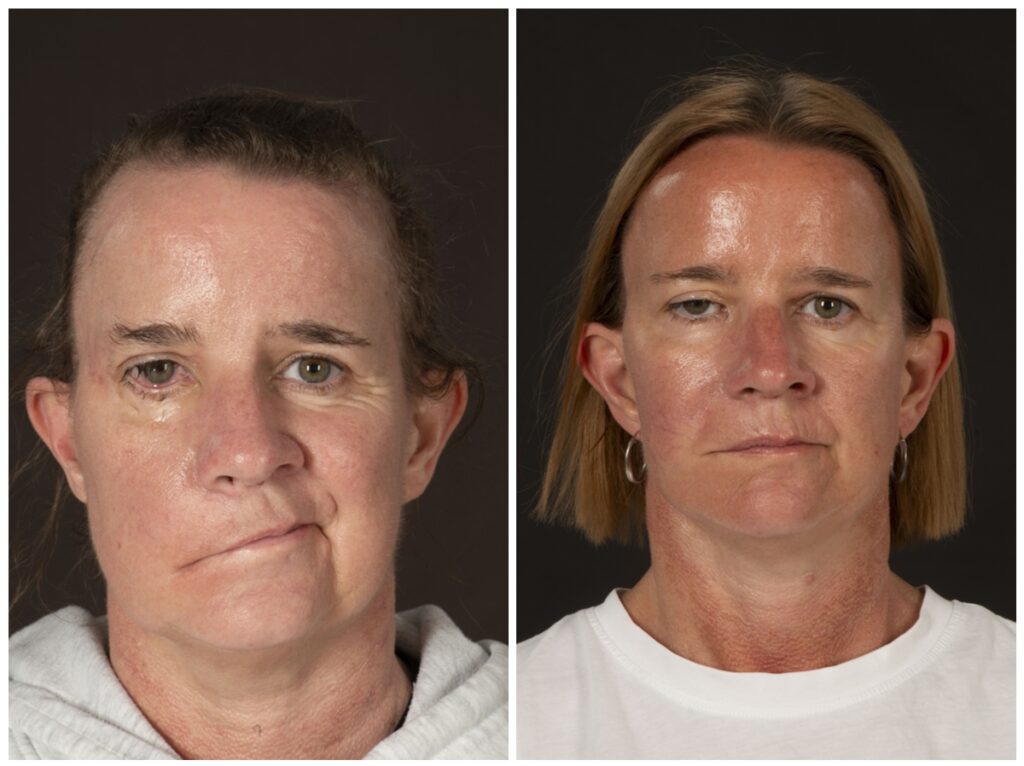
These images show examples of patient outcomes following treatment with Ms Tzafetta. Every patient is different, and results depend on individual anatomy, the procedure performed, healing, and clinical circumstances. During consultation, Ms Tzafetta will discuss what may be realistic and appropriate for you.
Case 1
Facial Paralysis Reconstruction
Procedure: Nerve Transfers
Timing: 12 months after surgery
Notes: This 47-year-old patient suffered from facial paralysis. We expect more improvement over time as part of the hypoglossal, masseteric and branches of the contralateral facial nerve were used.
Case 2
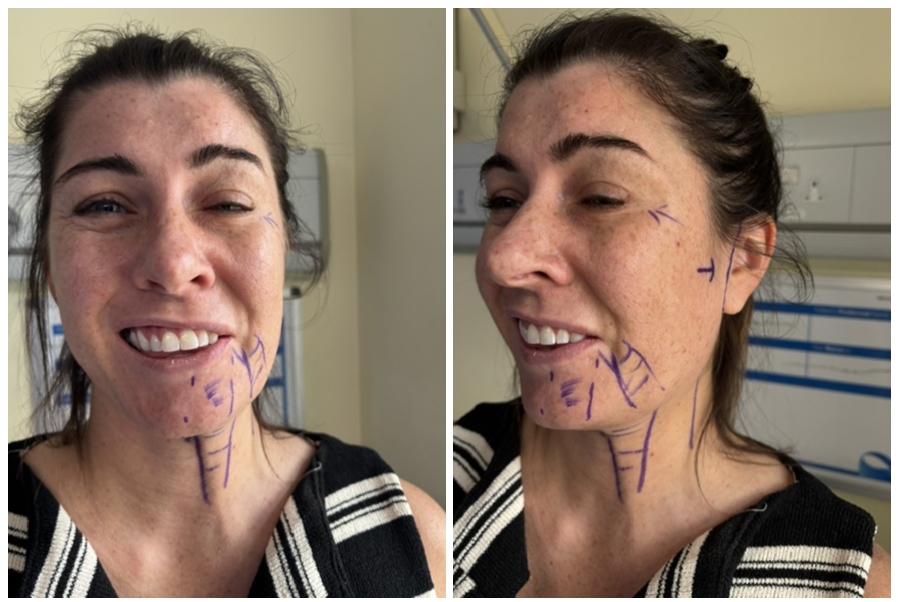
Post-paretic synkinesis
Following facial paralysis, some patients may develop post-paretic synkinesis. This can cause a combination of weakness, tightness in the facial muscles and unwanted facial movement.
The first line of management usually includes specialist facial therapy and neuromodulation. For some patients, surgery may be considered after a period of careful assessment and treatment. Surgical options can include selective neurectomies, myectomies and, in some cases, nerve transfers to help improve balance and coordination of facial movement.
This patient underwent surgery to help improve facial balance and smile movement. The images show early progress following treatment.
Recovery after facial paralysis treatment is often an ongoing process. Facial therapy and neuromodulation may continue for a period of time after surgery to support movement, comfort and long-term outcome.
 videoandweb.com