
Surgery After Ozempic Weight Loss: What Are Your Options?

Life after significant weight loss.
Surgery after Ozempic weight loss can address loose skin, loss of facial volume, and changes in body contour that remain after a substantial weight reduction. Depending on the areas affected, options may include a facelift or neck lift, fat transfer, abdominoplasty, breast surgery, an arm lift, or a thigh lift.
These concerns are not unique to Ozempic. Similar changes can follow any major reduction in body weight. However, the increasing use of GLP-1 medications such as Ozempic, Wegovy and Mounjaro means that more patients are now seeking advice about treatment once they have reached a stable weight.
The right approach depends on the individual’s anatomy, the extent of tissue laxity, and what the patient hopes to improve.

GLP-1 medication can support substantial weight loss.
Face and Neck
Substantial weight reduction can lead to facial deflation. Loss of subcutaneous fat may cause hollowing through the cheeks and temples. Reduced support can also make jowling, jawline changes and neck laxity more apparent.
The popular expression “Ozempic face” describes this appearance, but it is not a medical diagnosis. The same features can develop following weight reduction through other means. Therefore, treatment should address the underlying anatomy rather than the label.
Where volume loss is the principal concern, carefully placed filler or autologous fat transfer may help restore facial balance. However, adding volume cannot adequately correct established tissue descent or significant skin laxity.
In these circumstances, a facelift or neck lift may provide a more appropriate solution. Surgery can reposition deeper tissues, improve jawline definition and address laxity through the lower face and neck. Fat transfer can sometimes complement the procedure where volume is lost.
The aim is not simply to tighten the face. Good facial surgery restores proportion and definition while preserving natural movement and individual character.

Weight loss can alter facial and neck contours.
Body Contouring
After significant weight loss, redundant skin commonly affects the abdomen, breasts, upper arms, and thighs. An abdominoplasty, or tummy tuck, removes excess skin and subcutaneous tissue from the abdomen. Where necessary, the surgeon can also address rectus diastasis and improve the abdominal wall.
Loss of breast volume may leave a flattened or deflated appearance. A mastopexy, or breast lift, can reshape and reposition the breast. Depending on the individual anatomy, the surgeon may also consider additional procedures.
A brachioplasty can remove redundant tissue from the upper arms, while a thigh lift addresses significant laxity around the thighs.
Some patients have concerns affecting several areas. In these circumstances, the surgeon may recommend staged treatment rather than performing multiple extensive procedures during a single operation. Safety, recovery and the quality of the eventual outcome should always guide that decision.
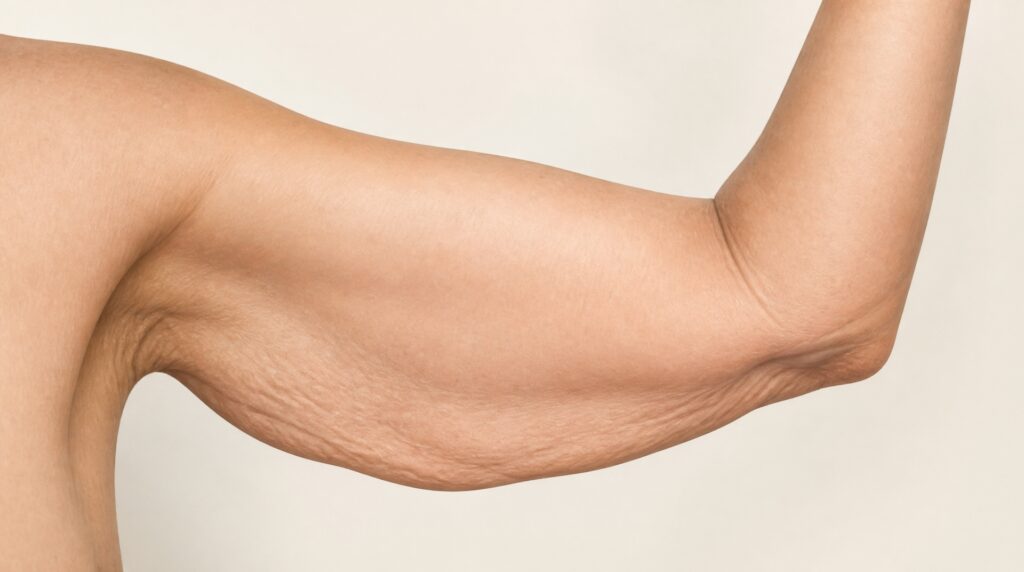
Upper arm laxity following weight loss.
When Is Surgery Appropriate?
There is usually little benefit in rushing into surgery while weight is still changing. Ideally, patients should reach a stable, sustainable weight before undergoing significant facial or body contouring. Further weight reduction after an operation may cause additional laxity and alter the result.
General health also matters. Nutritional status, smoking, medication, previous surgery and other medical factors can influence wound healing and recovery.
For this reason, careful assessment comes before surgical planning.
Under the care of Ms Kallirroi Tzafetta, anatomy, tissue quality, general health, and individual priorities all guide the decision to operate. Sometimes one focused procedure is appropriate. In other cases, staged treatment offers a better approach.
Experienced surgical judgement includes knowing not only what can be done, but what should be done and when.
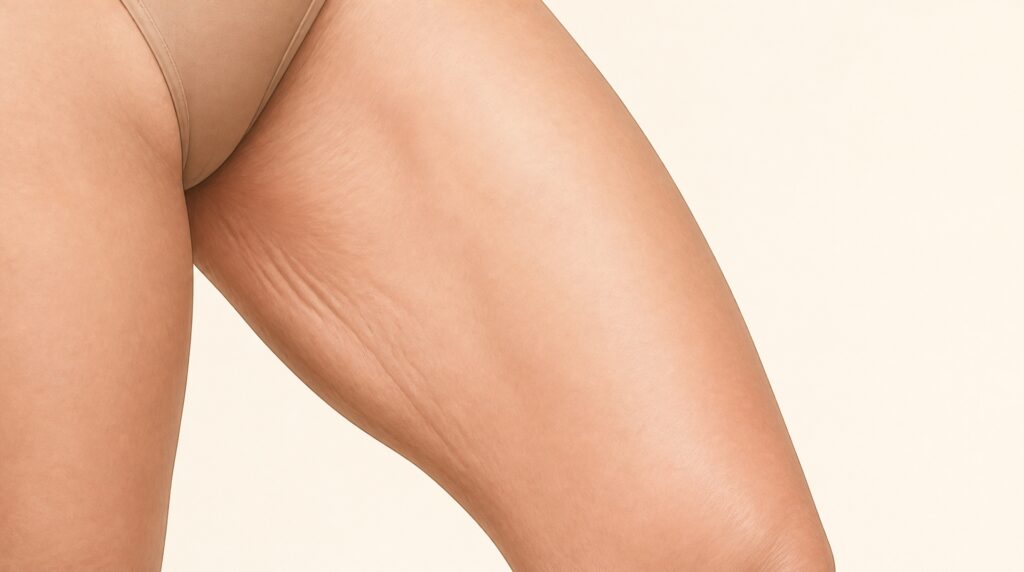
Thigh laxity following weight loss.
GLP-1 Medication and Surgery
If you take Ozempic, Wegovy, Mounjaro or another GLP-1 medication, your surgeon and anaesthetist need to know.
These medicines can affect gastric emptying, which may influence anaesthetic planning. Guidance continues to develop. Therefore, your clinical team will consider the medication, your individual circumstances and the proposed operation.
Do not stop prescribed medication without appropriate medical advice. Your clinical team will advise you during the pre-operative assessment.

Considering body contouring after weight loss.
Frequently Asked Questions
How long should I wait after losing weight before having plastic surgery?
Ideally, your weight should remain stable before significant facial or body contouring surgery. There is no single waiting period that is appropriate for everyone. Therefore, your surgeon should consider timing as part of your individual assessment.
Will loose skin tighten without surgery?
Some contraction can occur after weight reduction, particularly in younger patients with good skin elasticity. However, substantial redundant skin is unlikely to disappear completely without surgery.
Can a facelift correct “Ozempic face”?
When facial deflation reveals significant tissue descent and skin laxity, a facelift may be appropriate. If volume loss is also present, fat transfer or another carefully selected treatment may complement surgery.
What surgery can remove loose abdominal skin?
An abdominoplasty removes redundant skin and subcutaneous tissue from the abdomen. Where appropriate, the surgeon can also address rectus diastasis during the procedure.
Can several areas be treated at the same time?
Sometimes, but combining procedures is not always the safest or most appropriate option. The surgeon must consider operative time, recovery and individual risk. For more extensive treatment, a staged approach may offer a better option.
Do I need to stop Ozempic before surgery?
Not necessarily. Advice surrounding GLP-1 medications and anaesthesia continues to evolve. Your surgeon and anaesthetist should review your medication and provide individual instructions before the procedure.
Is surgery after weight loss suitable for everyone?
No. Suitability depends on your general health, weight stability, anatomy, tissue quality and expectations. A specialist consultation can determine whether surgery is appropriate and which procedure may offer the greatest improvement.
 videoandweb.com