Rhinoplasty (Nose Job)

Rhinoplasty, often referred to as nose surgery, adjusts the shape, balance or function of the nose so it sits more comfortably with the rest of the face. Because the nose sits at the centre of the face, even small refinements can influence overall facial harmony.
People explore rhinoplasty for many different reasons. Some have felt self-conscious about the shape of their nose from a young age. Others notice changes after injury, breathing difficulties or previous surgery. For many people, appearance and function intertwine.
Ms Tzafetta views rhinoplasty as a procedure that calls for careful judgement, detailed planning and respect for facial balance, rather than dramatic or fashionable change.
When rhinoplasty may help
You may consider rhinoplasty if you feel concerned about:
- the size or overall shape of your nose in relation to your face
- width across the bridge or nostrils
- a visible hump or dip along the bridge
- a nasal tip that feels heavy, droops or turns upward
- asymmetry or deviation of the nose
- breathing difficulty linked to a deviated nasal septum
Rather than aiming for a standardised result, rhinoplasty works to improve proportion, balance and function in a way that feels appropriate for you.
A considered approach to nose surgery
Rhinoplasty involves reshaping bone, cartilage and, in some cases, the soft tissues of the nose. These structures influence both appearance and breathing, which makes thoughtful planning essential.
Because changes to the nose can subtly alter the appearance of the entire face, decisions around surgery benefit from a measured, personal approach. The strongest outcomes usually come when surgery feels right for you, not rushed or externally driven.
Ms Tzafetta draws on her experience in facial and reconstructive surgery to plan refinements that support long-term nasal function while preserving your natural features.
Your rhinoplasty consultation
A consultation with Ms Tzafetta provides the starting point for safe and effective rhinoplasty.
During this appointment, you can talk through what concerns you about your nose and what you hope surgery might change. The focus stays on clarity, realism and shared understanding rather than on pressure or quick decisions.
You should expect to discuss:
- what you would like to change and why
- your general health and medical history
- any previous nasal injury or surgery
- breathing symptoms or functional concerns
- medications, smoking and lifestyle factors
Ms Tzafetta will assess facial structure, skin quality, nasal anatomy and breathing. Clinical photographs may support planning. She will also talk through realistic outcomes, potential risks and the recovery process, so you can make an informed decision with confidence.
Rhinoplasty techniques
The surgical approach depends on your anatomy and the degree of change required.
Closed rhinoplasty
Closed rhinoplasty uses incisions placed entirely inside the nostrils. Ms Tzafetta may suggest this option for selected cases where more limited reshaping is appropriate. It avoids visible external scars and can shorten recovery, but it does not suit every concern.
Open rhinoplasty
Open rhinoplasty provides direct access to the nasal framework through a small incision across the columella, the tissue between the nostrils. Ms Tzafetta uses this approach for more complex reshaping, including work on the nasal tip, correction of asymmetry or revision surgery. With careful technique, scars usually heal discreetly.
Types of rhinoplasty
Reduction rhinoplasty
Reduction rhinoplasty reduces the overall size or prominence. Ms Tzafetta reshapes bone and cartilage and corrects a deviated septum where necessary. The emphasis remains on balance rather than simply making the nose smaller.
Augmentation rhinoplasty
Augmentation rhinoplasty adds projection or support, often when the bridge appears flat or underdeveloped. Ms Tzafetta uses cartilage or other appropriate materials to build structure, choosing options that prioritise safety and long-term stability.
Revision rhinoplasty
Revision rhinoplasty addresses concerns following previous nose surgery. Scar tissue and altered anatomy increase complexity, so Ms Tzafetta plans these procedures with particular care. In some cases, cartilage from the ear or rib supports reconstruction.
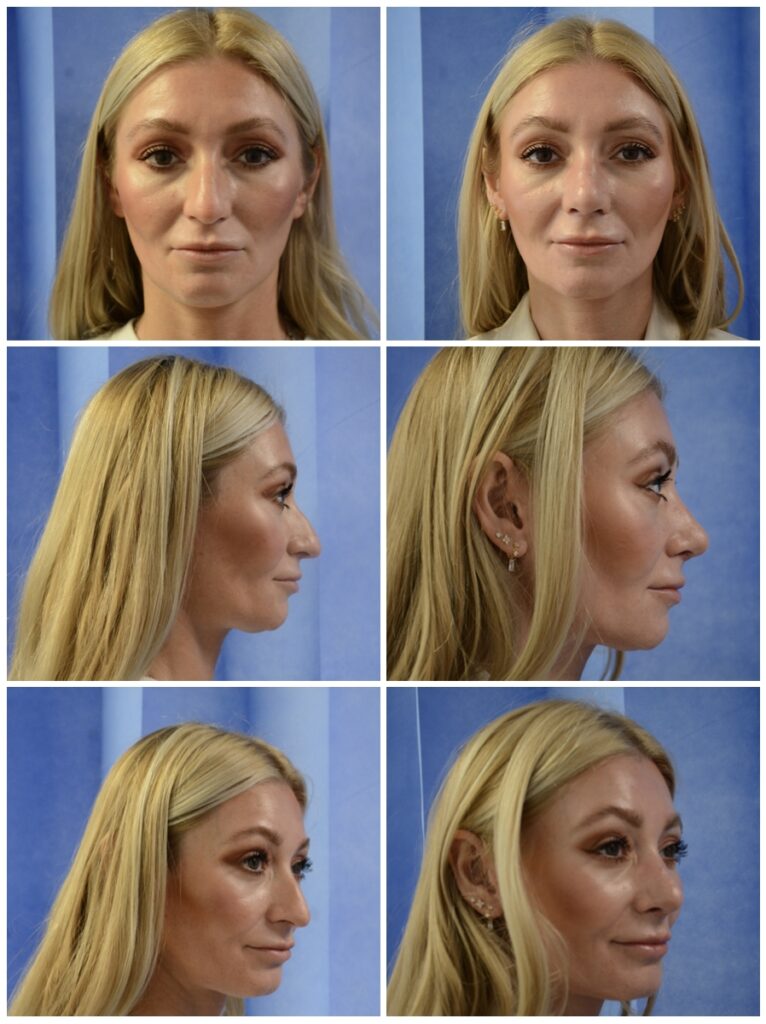
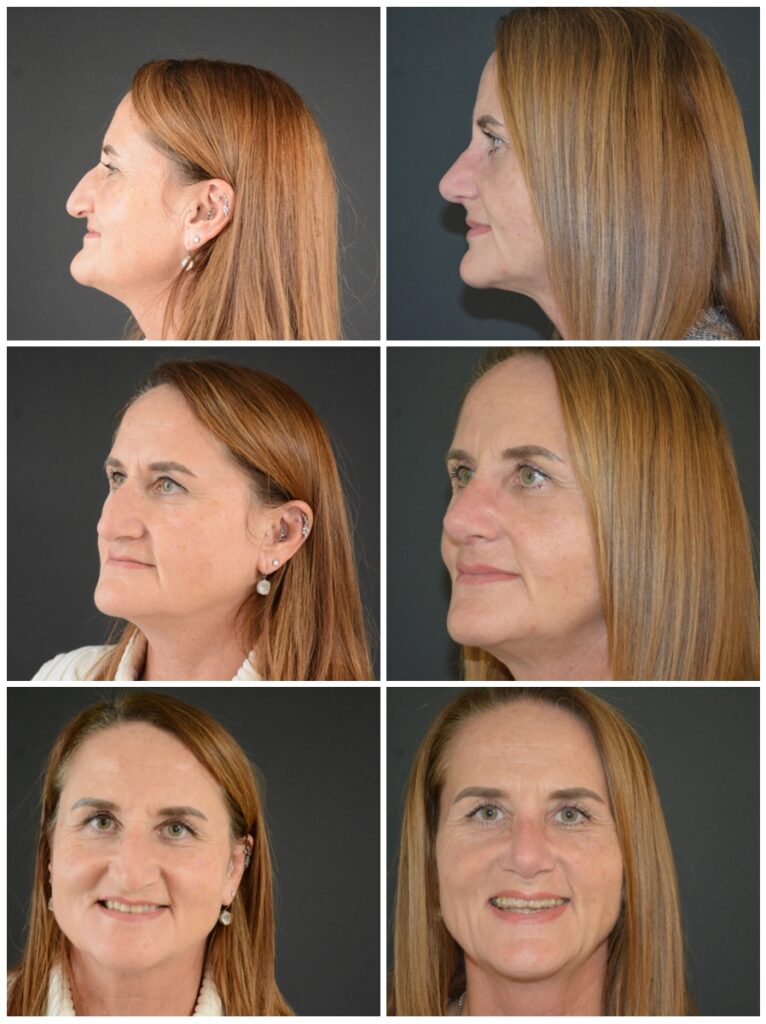
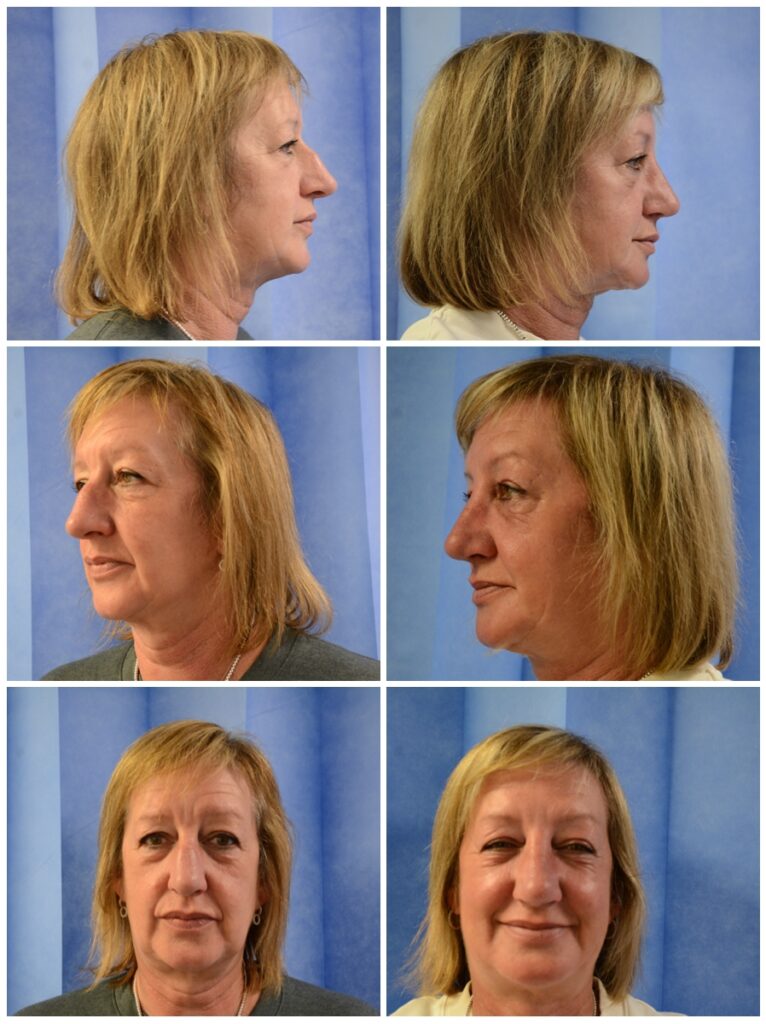
Before and After Images
These images show examples of patient outcomes following treatment with Ms Tzafetta. Every patient is different, and results depend on individual anatomy, the procedure performed, healing, and clinical circumstances. During consultation, Ms Tzafetta will discuss what may be realistic and appropriate for you.
Case 1
Procedure: Rhinoplasty (Nose Job)
Timing: 6 weeks after surgery
Notes: This patient kindly gave permission for her images to be shared. The photographs show her before and after rhinoplasty surgery. Each patient’s treatment plan is individual, and results vary depending on anatomy, healing, skin quality and clinical circumstances. Images are shared with patient consent.
Case 2
Procedure: Rhinoplasty (Nose Job)
Notes: The images are shared with patient consent and are intended to support understanding of the procedure. Results vary from patient to patient, and outcomes depend on individual anatomy, healing, skin quality and the treatment plan discussed during consultation.
Case 3
Procedure: Structural Open Rhinoplasty (Nose Job)
Timing: 5 weeks after surgery
Notes: This 55-year-old patient is shown five weeks after open structural rhinoplasty. Swelling is expected at this early stage, especially around the nasal tip, and can continue to settle gradually for more than a year. Images are shared with patient consent. Individual results vary.
Recovery and expectations
Recovery depends on the extent of the surgery, but most people notice that swelling and bruising improve significantly within 10 to 14 days. Some residual swelling can persist for several months, particularly around the nasal tip.
Many people feel able to return to desk-based work within 1 to 2 weeks, depending on how comfortable they feel and whether visible bruising has settled. Those with physically demanding roles may need a little longer before returning to work.
Strenuous exercise should usually wait for 3 to 4 weeks, while gentle activity can resume sooner. Ms Tzafetta will provide tailored guidance based on your procedure and recovery progress.
The nose gradually refines over time, with final results typically becoming clear over 12 months as swelling fully settles.
Rhinoplasty FAQs
How long does rhinoplasty surgery take?
Rhinoplasty surgery usually takes two to three hours, depending on the complexity of the changes and whether functional correction is required. Ms Tzafetta will explain the expected duration during your consultation based on your anatomy and treatment plan.
Will rhinoplasty affect my breathing?
Rhinoplasty can improve breathing when a deviated septum or internal nasal structure restricts airflow. Ms Tzafetta assesses nasal support and airway function alongside appearance, as long-term breathing comfort plays a central role in successful outcomes.
Will I have visible scars after rhinoplasty?
Closed rhinoplasty leaves no visible external scars. Open rhinoplasty involves a small incision between the nostrils, which usually heals discreetly. Scar appearance depends on healing, skin type and surgical technique, all of which Ms Tzafetta will discuss with you during consultation.
How long does recovery take?
Most swelling and bruising improve within 10 to 14 days, although subtle swelling may persist for several months, particularly around the nasal tip.
Many people feel comfortable returning to desk-based work within 1 to 2 weeks. Strenuous exercise usually resumes after 3 to 4 weeks.
Ms Tzafetta will provide personalised guidance on returning to work, activity and daily routines.
Will my nose look very different?
Rhinoplasty aims to improve balance rather than create a dramatic or artificial change. The goal is a result that looks natural and proportionate to your face. Clear discussion during consultation helps ensure expectations remain realistic.
Is rhinoplasty painful?
Most people describe rhinoplasty as uncomfortable rather than painful. Pain-relief medication manages early discomfort, while congestion and pressure usually ease as swelling settles over the first few weeks.
Can I have rhinoplasty if I have had nose surgery before?
Yes, although revision rhinoplasty requires careful assessment. Previous surgery can alter nasal anatomy and increase complexity. Ms Tzafetta will explain whether further surgery could improve appearance or function and outline any additional considerations.
Who performs rhinoplasty surgery?
Ms Tzafetta performs rhinoplasty with a focus on facial balance, nasal function and long-term stability. Her background in reconstructive and facial surgery supports an anatomy-led approach guided by patient safety and realistic outcomes.
When should I consider rhinoplasty?
You may consider rhinoplasty if concerns about your nose affect your confidence, comfort or breathing. Surgery works best when decisions feel thoughtful and unhurried. A consultation with Ms Tzafetta can help clarify whether rhinoplasty suits your goals and anatomy.
Patient Experiences
Many people find it helpful to hear from others who have been through a similar experience. The reflections below share individual patient perspectives, offered to help you understand what care and recovery can feel like in practice.
first class experience
Firstly, it’s only 6 weeks since my op and the recovery both visually and physically has been phenomenal. The psychological hang ups I experienced prior to the op have disappeared and feel so much more confident in myself within an incredibly short time period. Whilst the op was driven by the need and desire to re-proportion my nose there was an issue with my septum being of centre and restricting air flow – this too has been corrected. I placed a huge amount of trust in Kallirroi and she reciprocated in equal measure – the pre op and post op care has been first class and can’t recommend her highly enough. For a relatively small sum and a life changing procedure you just need to go for it – you’ll be well rewarded.
I would recommend Tzafetta to everyone!
What a wonderful woman!
Ms Tzafetta has changed my life, not just physically but mentally too. For most of my life I have felt self conscious about my appearance, that is a thing of the past. From our first appointment Ms Tzafetta has made me feel beautiful, but also acknowledged my concerns with the size and shape of my nose. She listened and understood how I would ideally like the end result to look, and I am happy to say that the end result is perfect!
Ms Tzafetta was a constant support when I was going through the healing process, and I had various appointments with her until we were both happy to leave longer gaps between appointments.
I can honestly say that I have 100% trust in Ms Tzafetta and would recommend her to anyone thinking of having a rhinoplasty.
Lovely Surgeon
Ms Tzafetta was lovely and made me feel at ease (I was very nervous). She’s very upbeat and positive. My result was natural which is what I asked for and a big improvement. I don’t think anything can prepare you for the swelling during recovery. I felt I looked terrible but it settled eventually.
Further Reading:
British Association of Plastic Reconstructive and Aesthetic Surgeons
 videoandweb.com