
Facelift and Neck Lift Surgery – Choosing the Right Approach

Natural changes in the face and neck with age.
As we age, changes in the face and neck can gradually alter our appearance. The jawline may lose definition, jowls become more noticeable, and the skin beneath the chin may begin to loosen. Although these changes often develop together, they do not always require the same surgical approach.
A facelift primarily addresses ageing in the lower face, while a neck lift focuses on the tissues beneath the chin and through the neck. For some patients, combining the two offers a more balanced result. However, the distinction is not always straightforward, as many modern facelift techniques already include elements of neck rejuvenation.
What Does a Facelift Correct?
As facial tissues gradually descend with age, the cheeks may lose definition, jowls develop, and the transition between the face and neck becomes less distinct.
Modern facelift surgery, or rhytidectomy, addresses more than the skin alone. By repositioning the deeper supporting tissues, including the superficial musculoaponeurotic system (SMAS), the surgeon can improve facial contour without relying on excessive skin tension.
A facelift may be appropriate when jowling, lower facial descent or loose skin affect the natural definition of the face. The objective is to restore support and improve the jawline while preserving individual facial character.
However, a facelift does not necessarily correct significant neck laxity, particularly when the underlying muscles require additional attention.
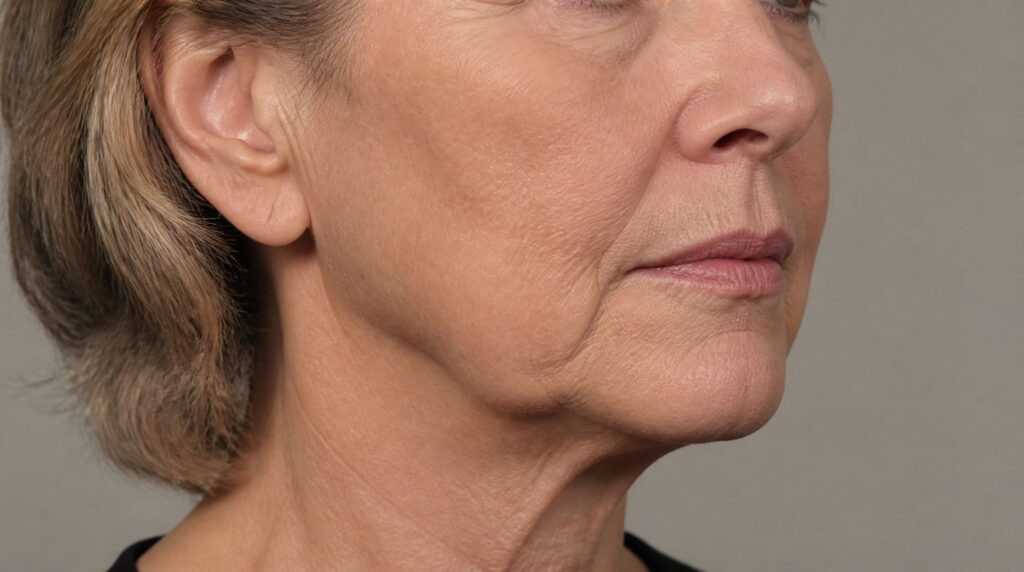
Age-related changes in the lower face and jawline.
What Does a Neck Lift Correct?
A neck lift focuses on improving the contour beneath the chin and through the neck.
With age, the skin gradually loses elasticity. Changes in the platysma muscle may produce visible vertical bands, while alterations in fat distribution can soften the angle between the chin and neck.
Depending on the anatomy, surgery may involve removing excess skin, addressing localised fat deposits or tightening the platysma.
Some patients retain good facial definition but develop noticeable neck laxity. In these circumstances, a neck-focused procedure may be appropriate. Where jowling is also present, treating the neck alone may leave an imbalance between the two areas.
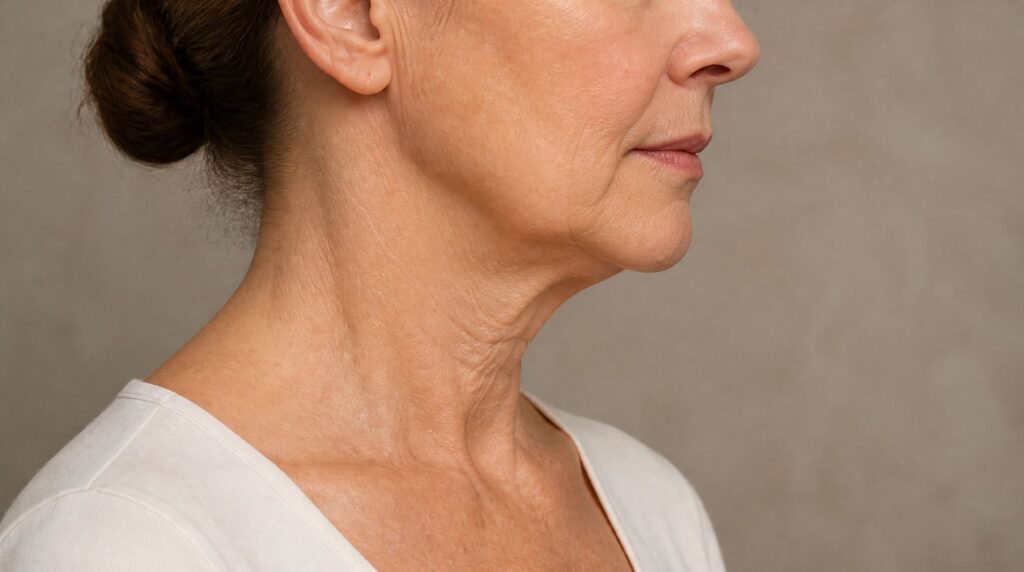
Skin laxity beneath the chin and along the neck.
When Should Both Procedures Be Combined?
The face and neck form a continuous anatomical structure, which is why surgeons frequently combine facelift and neck lift techniques.
A patient may have prominent jowls alongside loose skin beneath the chin. Correcting only one area could improve part of the appearance while leaving the adjacent tissues relatively unchanged.
Treating the lower face and neck together allows the surgeon to restore a smoother transition across the jawline. Where appropriate, this can produce a more harmonious result than either procedure alone.
The terminology can sometimes be confusing. Many modern facelifts already incorporate neck rejuvenation, so a combined facelift and neck lift does not necessarily mean two separate operations. What matters is the anatomical correction required, rather than the name of the procedure.
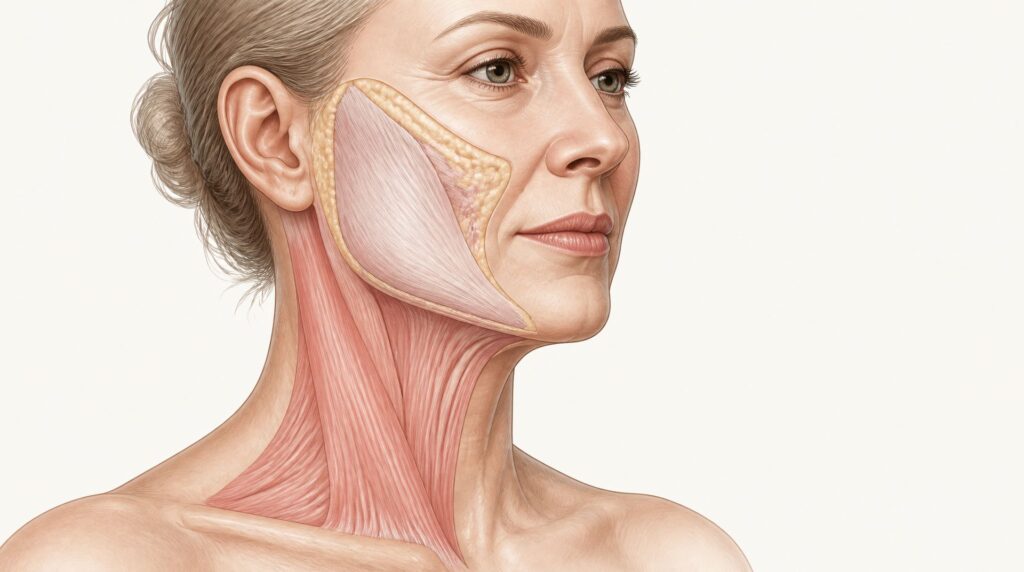
The anatomical relationship between the face and neck.
Choosing the Right Surgical Approach
No single facelift or neck lift technique suits everyone. The extent of tissue descent, skin elasticity and underlying facial structure all influence surgical planning. Some patients benefit from a limited correction, while others require more extensive repositioning of the deeper tissues. Significant facial volume loss may also need consideration, particularly following substantial weight reduction.
During surgical planning, Ms Kallirroi Tzafetta considers the relationship between the face and neck, the condition of the supporting tissues and the changes each patient wishes to address.
Her approach places particular importance on selecting the appropriate technique rather than performing more extensive surgery than necessary.
Age alone does not determine suitability. Tissue quality and general health are often more important than a patient’s chronological age.
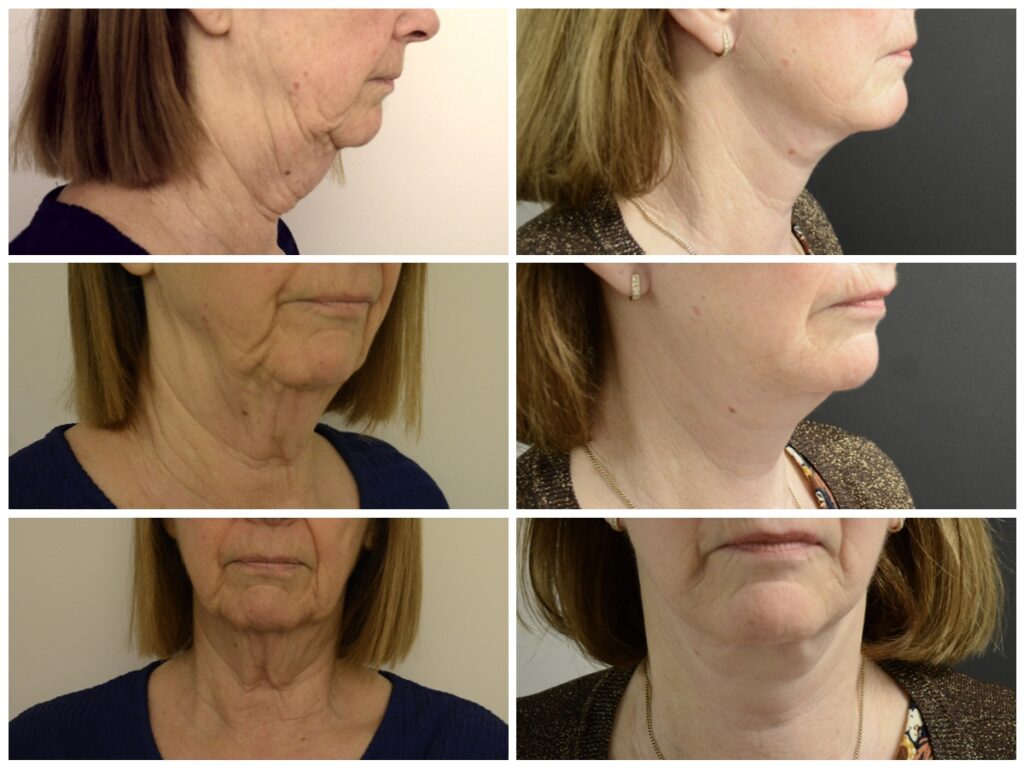
Before-and-after views of facial and neck surgery.
The Importance of Natural Facial Balance
A successful facelift or neck lift should not make the face appear tight or fundamentally different. The aim is to restore definition while respecting the patient’s natural features.
For some, the neck is the principal concern. Others may benefit from treating the lower face as well.
The most appropriate operation is the one that addresses the underlying anatomy without unnecessary intervention.
Frequently Asked Questions
Can I have a neck lift without a facelift?
Yes. A neck lift may be appropriate when laxity is mainly confined to the neck and the lower face retains good definition. However, significant jowling may make a combined approach more suitable.
Does a facelift also tighten the neck?
Many facelift techniques include some degree of neck correction. The extent depends on the operation and the patient’s anatomy. Significant neck laxity or platysma banding may require additional techniques.
Will a neck lift improve my jawline?
A neck lift can improve definition beneath the jaw by addressing loose skin and muscle laxity. If jowls contribute to the loss of jawline definition, a facelift may also be necessary.
What is the best age for a facelift or neck lift?
There is no ideal age. Suitability depends on tissue changes, skin quality and general health rather than age alone.
How long do facelift and neck lift results last?
Results can remain evident for many years, although the face and neck continue to age. Longevity varies according to individual anatomy and surgical technique.
Is recovery longer when both procedures are combined?
Recovery depends on the extent of surgery. A combined operation may involve more swelling and bruising, but the surgeon can explain the expected recovery during consultation.
How do I know which procedure I need?
A specialist consultation can establish whether the main concern arises from the lower face, neck or both. Examination of the supporting tissues and skin laxity helps determine the most appropriate approach.
Further Reading:
Face Lift Surgery (Rhytidectomy)
Neck Lift Surgery (Platysmaplasty)
 videoandweb.com
