
Ms Tzafetta attends EURAPS 2026 in Vienna
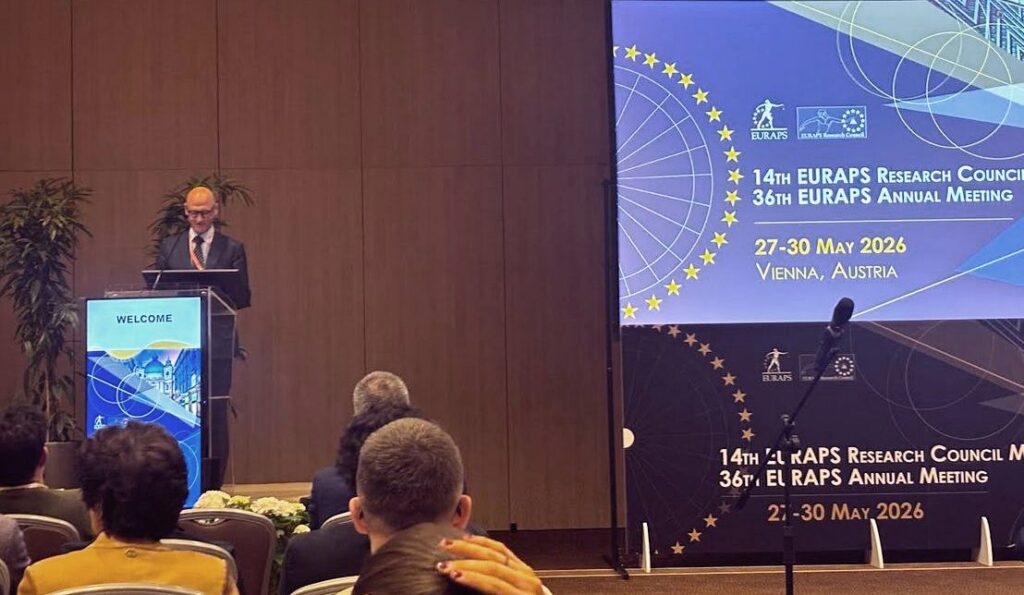
Ms Kallirroi Tzafetta recently attended the 36th Annual Meeting of the European Association of Plastic Surgeons, known as EURAPS, held from 28 to 30 May 2026 in Vienna, Austria.
The annual EURAPS meeting is recognised as a high-level scientific event, bringing together plastic surgeons from across Europe and around the world. For specialists working in plastic, reconstructive and aesthetic surgery, it provides an important opportunity to share knowledge, discuss new developments and strengthen professional collaboration across international surgical practice.
A leading international meeting for plastic surgeons
The 2026 EURAPS Annual Meeting took place in Vienna, a city with a long medical and academic tradition. The event welcomed plastic surgeons, researchers and clinical leaders for three days of scientific discussion, presentation and professional exchange.
Meetings of this kind play an important role in surgical progress. Plastic and reconstructive surgery continues to evolve through careful research, shared experience and discussion between specialists. For patients, this commitment to continuous learning matters. It means that treatment approaches are not shaped by routine alone, but by ongoing reflection, evidence and refinement.
For Ms Tzafetta, attending the meeting offered an opportunity to meet with colleagues and friends, exchange ideas and reflect on new developments in plastic surgery. These professional connections form a valuable part of specialist practice, particularly in fields where complex reconstruction, facial function and long term outcomes require thoughtful, expert judgement.
Ms Tzafetta’s role within EURAPS
Although Ms Tzafetta did not speak at this year’s meeting, her involvement with EURAPS extends beyond attendance. She is Chair of the Scientific Programme Committee, a role that includes responsibility for the webinars organised by EURAPS.
This position reflects her ongoing contribution to education and scientific exchange within the international plastic surgery community. Webinars and educational programmes allow surgeons to continue learning from one another beyond annual meetings, supporting discussion across countries, specialties and areas of expertise.
For patients researching specialist care, this kind of professional involvement is significant. It shows a commitment not only to clinical practice, but also to education, collaboration and the careful advancement of the field.

Exchanging ideas on new developments in plastic surgery
One of the most valuable aspects of a scientific meeting is the exchange of ideas. Plastic surgery is a broad and highly specialised field, covering reconstructive, aesthetic, microsurgical and functional procedures. Within this, facial reconstruction and facial reanimation require particular precision, experience and understanding of both appearance and function.
At meetings such as EURAPS, surgeons are able to discuss current research, evolving techniques and the practical realities of patient care. These conversations help ensure that surgical practice continues to move forward in a considered and responsible way.
Ms Tzafetta particularly valued the opportunity to meet with colleagues and friends, and to exchange ideas on new developments in plastic surgery. For a specialist whose work includes facial paralysis, facial reanimation and complex facial reconstruction, continued professional engagement supports the depth of knowledge required for this sensitive and demanding area of care.
Why ongoing education matters in specialist surgery
Specialist surgical care does not stand still. Techniques develop, evidence grows and understanding deepens over time. For patients living with facial paralysis, facial asymmetry or the effects of trauma, cancer treatment or nerve injury, this careful progression can make a meaningful difference.
Facial reanimation, in particular, requires detailed assessment and an individual approach. Each patient’s situation is different. The cause of facial paralysis, the time since onset, the degree of movement, the condition of the facial muscles and the patient’s personal priorities all influence the treatment pathway.
Ongoing education helps surgeons remain connected to the latest thinking while maintaining the judgement that comes from experience. High level scientific meetings allow specialists to examine new ideas critically, share outcomes and consider how developments may apply to real patient care.
Under the care of Kallirroi Tzafetta, care begins with listening and understanding what matters most to each individual. Professional learning supports that patient centred approach, helping ensure that advice remains thoughtful, informed and realistic.
An international commitment to excellence
Ms Tzafetta’s attendance at EURAPS in Vienna forms part of her wider commitment to excellence, education and international collaboration in plastic and reconstructive surgery.
Her specialist work in facial paralysis and facial reanimation sits within a field where both function and appearance matter deeply. Patients may be seeking help with movement, symmetry, eye closure, smile restoration, confidence or quality of life. These concerns are personal, and treatment decisions often require time, clarity and careful explanation.
By remaining actively involved in scientific meetings and educational programmes, Ms Tzafetta continues to contribute to the wider surgical community while bringing that knowledge back into her own practice.
The EURAPS Annual Meeting offered a valuable opportunity to connect with plastic surgeons from Europe and beyond, reflect on new developments and support the ongoing exchange of specialist knowledge. For patients and referring clinicians, this continuing commitment reinforces the importance of expert, ethical and informed care.
 videoandweb.com